
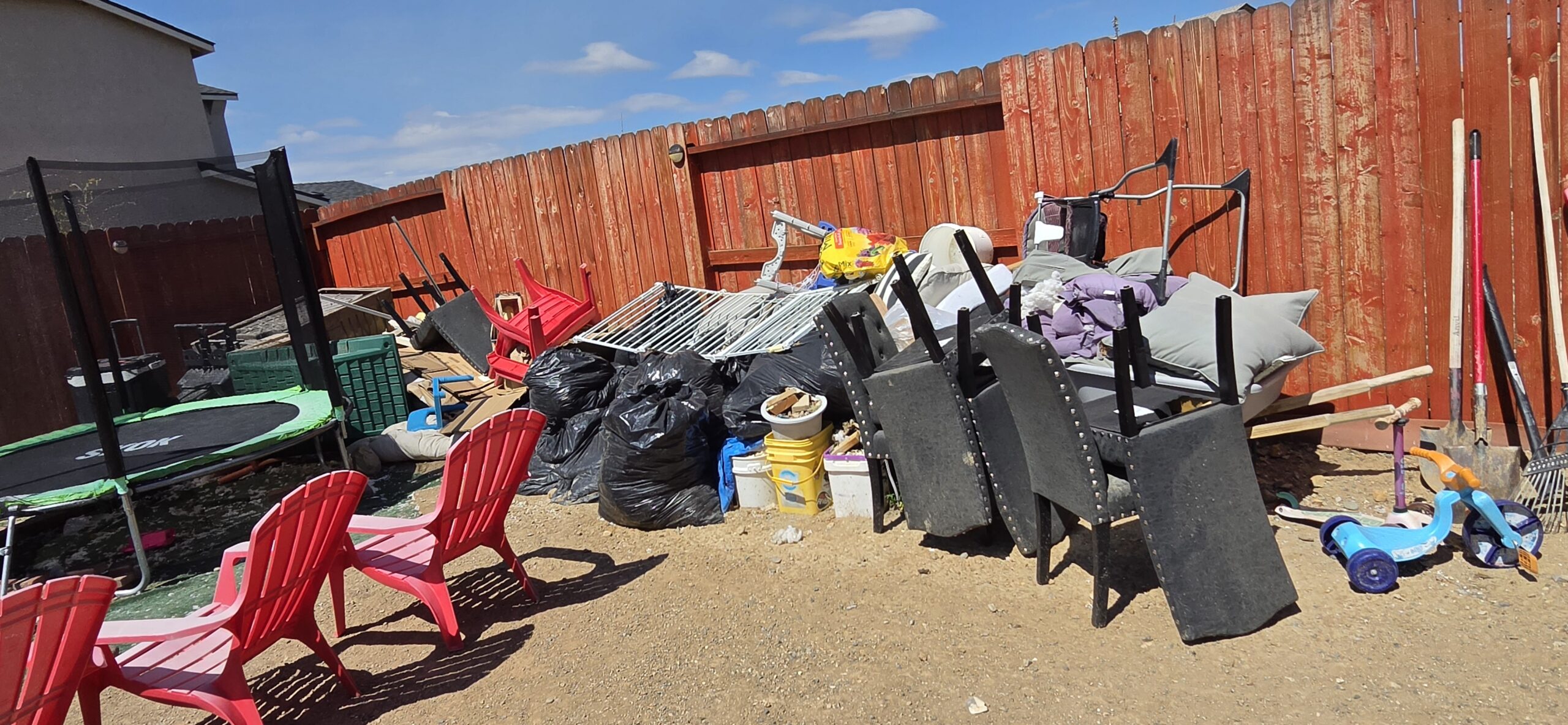
Clutter can give unwanted critters easy access to food, moisture, shelter, and hidden places to move or nest. Clearing cardboard, broken furniture, yard debris, open trash, and unused containers also makes it easier to spot nests, droppings, gnaw marks, and entry points.
Removing clutter will not eliminate an active infestation by itself. However, it can make a property less inviting and support cleaning, repairs, inspections, and pest treatment. In this blog, we’ll explain how clutter can create pest-friendly conditions, which items may cause the most concern, and what steps can help make your space less inviting to unwanted critters.
Why Clutter Can Attract Pests
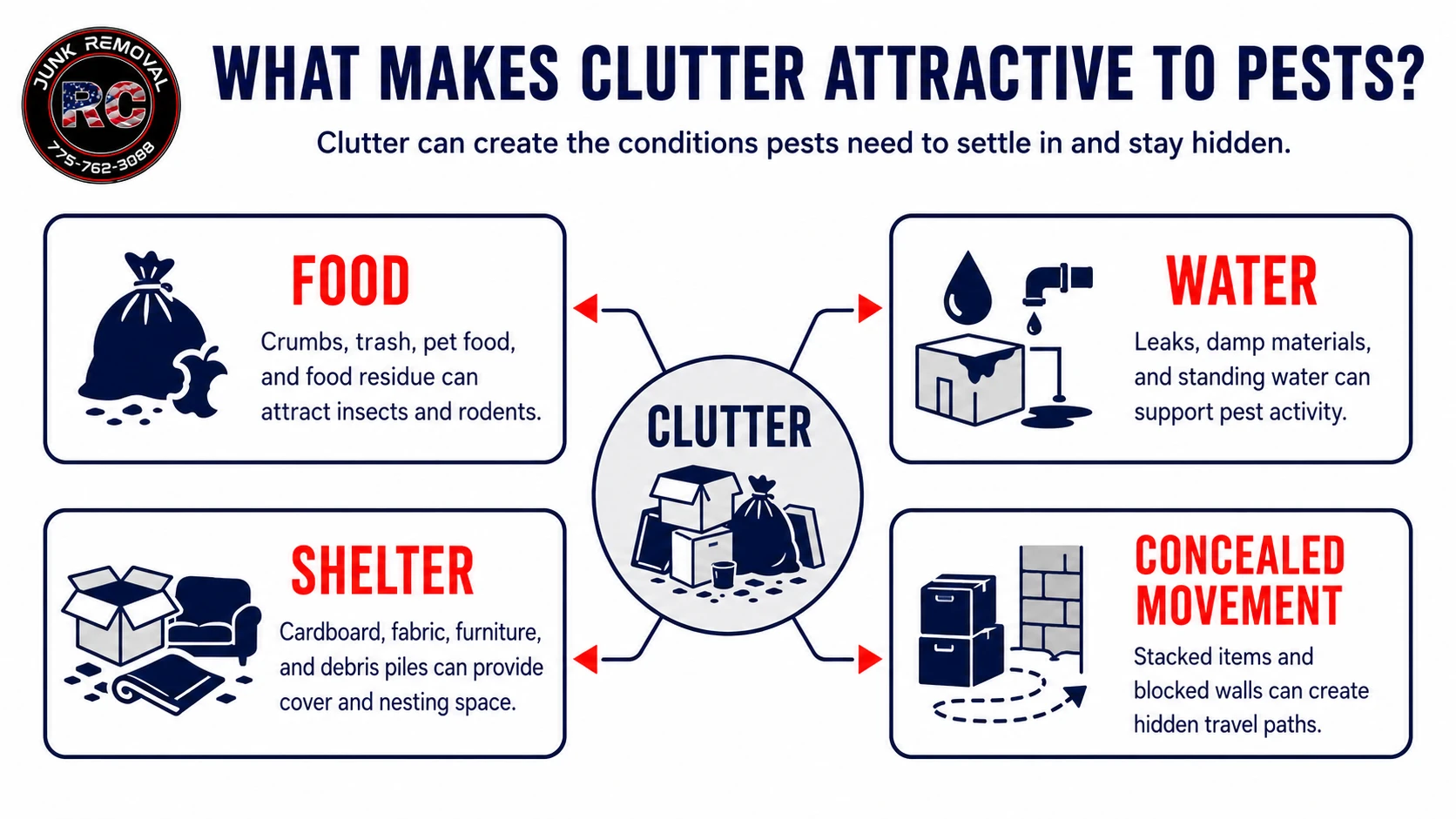
Pests enter homes, garages, sheds, and businesses in search of three basic resources:
- Food
- Water
- Shelter
A stack of boxes can offer cover and nesting material. An old appliance may hold food residue or moisture. Bags of trash can attract insects and rodents. Yard debris can create protected spaces near foundations and sheds.
Mice and rats also tend to move along walls or behind objects instead of crossing open spaces. Large piles let them travel between food and nesting areas without being easily seen.
Some Junk Creates More Risk Than Others
Items that hold moisture, contain food residue, or remain untouched for long periods deserve attention first.
| Type of junk | Why it may attract pests | Helpful next step |
| Cardboard and paper | Offers nesting material and tight hiding spaces | Recycle unused stacks |
| Upholstered furniture | Contains seams, padding, and enclosed areas | Inspect and remove unusable pieces |
| Open trash bags | May contain food residue and strong odors | Use covered containers |
| Yard debris | Creates shelter near buildings and fences | Clear piles and trim nearby growth |
| Broken appliances | May contain residue, insulation, or moisture | Empty, clean, and remove |
| Scrap wood | Provides covered spaces and travel routes | Store it off the ground or remove it |
| Pet-food containers | Can provide a steady food source | Use sealed, pest-resistant bins |
How Junk Removal Supports Pest Prevention
Junk removal works best as part of a larger prevention plan. The goal is not only to make a room look cleaner. It is to remove conditions that let pests settle and remain unnoticed.
It Reduces Hiding and Nesting Areas
Rodents may use paper, fabric, insulation, and other soft materials to build nests. Insects may hide inside boxes, furniture joints, cabinets, and damp piles. Removing unused items opens the space around walls, floors, shelves, and storage areas.
It Makes Warning Signs Easier to Find
Once clutter is gone, look for:
- Droppings
- Gnaw marks
- Damaged packages
- Nesting materials
- Shed insect skins
- Holes near pipes or vents
- Moisture damage
- Unusual odors
These signs can help you decide whether basic cleanup is enough or whether a pest-control specialist should inspect the property.
It Improves Access for Cleaning and Repairs
Clutter can block baseboards, drains, plumbing lines, foundations, and wall openings. Clearing these areas makes it easier to remove crumbs, dry damp surfaces, repair leaks, and close access points.
The U.S. Environmental Protection Agency recommends an integrated pest management approach that combines sanitation, monitoring, prevention, and targeted treatment. Junk removal helps by taking away some of the food sources, moisture, and hiding places that pests look for.
It Reduces Outdoor Cover
Brush, scrap wood, unused containers, and demolition debris can provide shelter near a structure. Removing these piles makes it easier to inspect foundations, sheds, fences, and utility areas.
University of Nevada, Reno guidance also recommends reducing debris and other hiding places as part of rodent and nuisance-wildlife prevention. Investing in timely junk removal can reduce pest-friendly conditions before the problem becomes harder to address.
A Junk Removal and Pest-Prevention Checklist
Use this process when clearing a garage, storage room, shed, yard, or vacant property.
- Inspect before moving anything: Look for droppings, nests, insects, damaged bags, and gnaw marks.
- Secure food sources: Store trash, birdseed, pet food, and pantry goods in sealed containers.
- Remove cardboard and paper piles: These materials can provide cover and nesting material.
- Clear items blocking walls and corners: Focus on furniture, appliances, cabinets, and stored equipment.
- Clean the newly exposed area: Remove crumbs, residue, and standing water.
- Check for entry points: Inspect doors, vents, pipes, foundations, roofs, and utility lines.
- Organize what remains: Use sealed bins and leave enough space to inspect around them.
- Monitor the area: Watch for new droppings, damage, sounds, or odors.
Cleanup Mistakes That Can Make Pest Problems Worse
Sweeping Dry Rodent Droppings
Do not sweep or vacuum dry droppings. This can send contaminated particles into the air.
The Centers for Disease Control and Prevention advises wetting rodent droppings and urine with disinfectant, allowing the solution to soak, and wiping the area while wearing rubber or plastic gloves.
Moving Infested Items to Another Room
Moving a box or piece of furniture without inspecting it may spread pests. Check seams, drawers, folds, undersides, and enclosed spaces before relocating an item.
Leaving Filled Bags Outside
Trash bags left beside a garage, wall, or fence can still attract insects and animals. Place them in covered containers or arrange prompt removal.
Clearing Clutter Without Sealing Openings
Pests may return when gaps remain around doors, pipes, vents, or foundations. Inspect and repair entry points after the space is clear.
Using Pesticides Without Correcting the Cause
Treatments may provide limited results when pests still have food, water, and shelter. Sanitation and exclusion should support any pest-control plan.
When Junk Removal Is Not Enough
Call a pest-control or wildlife specialist when you find an active infestation, repeated activity after cleaning, inaccessible nests, structural damage, or animals inside walls, attics, or crawl spaces.
Different conditions may require different services:
- Junk removal: Clears unwanted objects and accepted debris.
- Pest control: Identifies and treats active insects or rodents.
- Wildlife control: Handles larger animals while following rules that may apply to different species.
- Specialized cleanup: A qualified remediation provider may be needed for droppings, dead animals, biohazards, or heavily contaminated areas.
- Building repair: Seals openings and corrects property damage.
Do not handle unknown animals or disturb wildlife nests. Nevada rules may vary depending on the species.

Clear the Clutter and Reclaim Your Space
Removing junk can reduce hiding places, uncover warning signs, and make cleaning and repairs easier. Junk removal works best when you also store food securely, control moisture, seal openings, and call a pest-control company when needed.
RC Junk Removal helps homeowners and businesses remove accepted furniture, appliances, yard debris, construction debris, and general clutter in Reno, Sparks, Carson City, and surrounding areas. Call us or book online to request a free, no-obligation quote.